
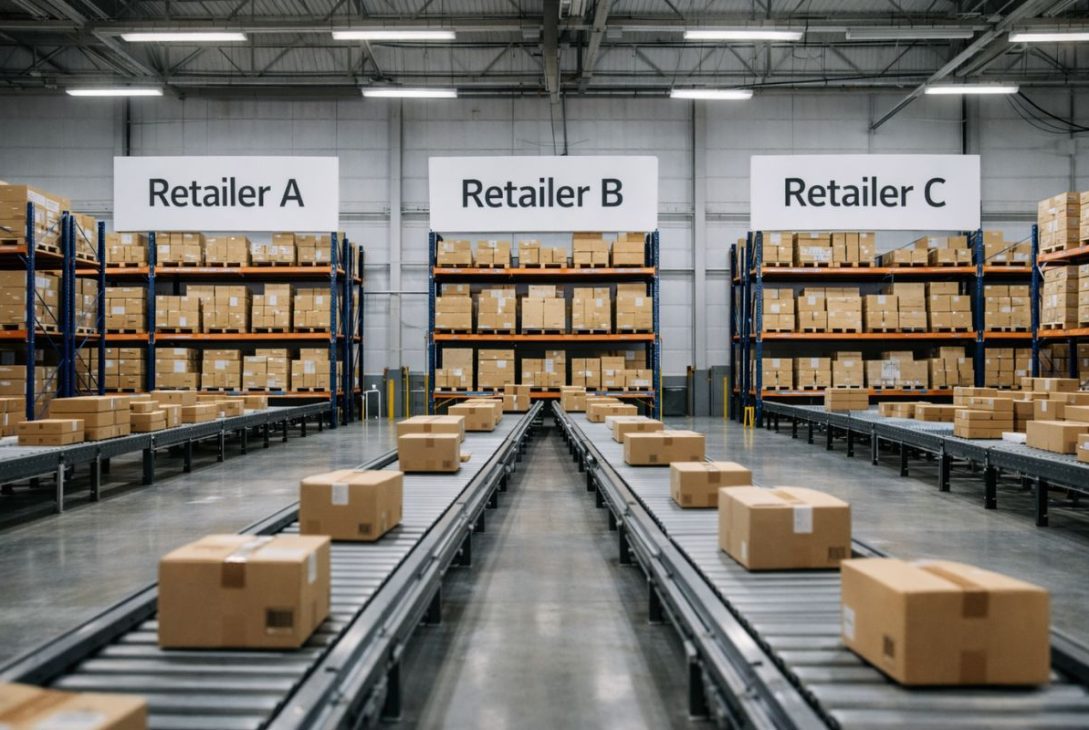
Retail supply chains are undergoing a profound structural transformation. Across North America and other mature commerce markets, organizations are progressively transitioning away from internally managed warehousing and distribution models toward marketplace led fulfillment ecosystems operated by specialized third party logistics providers. This shift reflects not a short term operational adjustment, but a deliberate reconfiguration of how goods are stored, moved, and delivered in an era defined by digital commerce.
Retailers are recognizing that integrated logistics platforms now offer a more efficient pathway to scalability, cost optimization, and market expansion than traditional ownership of physical infrastructure. As a result, fulfillment is evolving from a proprietary function into a coordinated service delivered through shared networks.
Historical Context: The Limitations of the Ownership Model:
For much of the twentieth century, retail competitiveness depended on the ability to control distribution assets. Companies invested heavily in warehouses, transportation fleets, and regional logistics teams to ensure product availability and timely delivery. While this vertically integrated model provided operational control, it also required substantial capital allocation and long development cycles.
Such investments were justified in an environment characterized by predictable demand patterns and geographically constrained markets. However, the rapid growth of ecommerce, coupled with escalating customer expectations for delivery speed and convenience, has exposed the limitations of this asset intensive approach.
Maintaining proprietary logistics infrastructure now imposes significant financial and operational burdens, particularly for small and medium sized enterprises seeking to compete in digitally connected markets.
The Emergence of Marketplace Led Fulfillment Ecosystems:
Marketplace led fulfillment ecosystems represent a departure from isolated supply chains. These systems consolidate warehousing, inventory management, order processing, and last mile delivery within coordinated platforms that serve multiple retail participants simultaneously.
Through shared infrastructure, retailers gain access to geographically distributed fulfillment centers, advanced logistics technologies, and established transportation networks without bearing the full cost of development and maintenance. This model aligns operational capacity with actual demand, enabling organizations to scale efficiently while preserving financial flexibility.
By integrating fulfillment directly with digital sales channels, marketplace ecosystems create seamless pathways between product availability and customer access, effectively collapsing the distance between inventory and end user.
Cost Optimization Through Shared Logistics Infrastructure:
One of the most compelling drivers behind this transition is the potential for meaningful cost rationalization. Traditional logistics models require high fixed expenditures related to property, labor, automation systems, and fleet management. These costs persist regardless of fluctuations in sales volume.
In contrast, third party fulfillment ecosystems distribute these expenses across numerous participants. Retailers pay for services as they are utilized, converting fixed capital obligations into variable operational costs. This structure improves financial predictability and reduces the risk associated with overcapacity or underutilization.
Such efficiency gains are particularly valuable for organizations navigating economic uncertainty or pursuing expansion into new regions without incurring disproportionate infrastructure investments.
Extending Digital Reach Through Integrated Distribution Networks:
Beyond cost considerations, marketplace led fulfillment enables retailers to achieve broader geographic reach with unprecedented speed. Because inventory can be positioned within established logistics networks, businesses are able to serve customers in multiple markets without constructing localized facilities.
Integrated delivery frameworks also support faster transit times by situating products closer to demand centers. This proximity enhances customer satisfaction while strengthening competitive positioning in categories where delivery performance directly influences purchasing decisions.
The ability to access national or even international distribution through a unified platform has effectively lowered the barriers to entry for digitally native brands and mid sized retailers alike.
Technological Enablement: The Intelligence Behind Modern Fulfillment:
The viability of shared logistics ecosystems is underpinned by advances in supply chain technology. Sophisticated software platforms coordinate inventory placement, demand forecasting, route optimization, and performance monitoring across distributed networks.
These systems rely on real time data analytics to anticipate purchasing behavior and dynamically allocate resources. As a result, fulfillment operations achieve levels of precision that would be difficult for individual retailers to replicate independently.
Technology therefore serves not merely as a support function but as the central intelligence layer that allows multiple businesses to operate cohesively within a shared logistical framework.
Strategic Implications for Small and Medium Sized Enterprises:
Small and medium sized enterprises stand to benefit significantly from this structural evolution. Participation in marketplace led fulfillment provides access to capabilities historically reserved for large multinational retailers, including advanced warehousing automation, sophisticated shipping coordination, and expansive delivery coverage.
By outsourcing complex logistics operations, these organizations can concentrate managerial attention on brand development, product innovation, and customer engagement. The redistribution of resources toward value creating activities enhances long term competitiveness while mitigating operational strain.
At the same time, SMEs must exercise careful oversight in selecting fulfillment partners, ensuring alignment with service standards, data transparency requirements, and cost structures that support sustainable growth.
The Convergence of Physical and Digital Retail Infrastructure:
Another notable dimension of this transformation is the convergence of physical retail environments with digital fulfillment networks. Traditional storefronts are increasingly integrated into broader distribution strategies, functioning as localized nodes for pickup, returns, or expedited shipping.
This hybridization reflects a retail landscape in which channels are no longer discrete. Instead, physical locations, ecommerce platforms, and logistics providers collaborate within unified ecosystems designed to deliver consistent customer experiences.
Such integration reinforces the notion that fulfillment has become a shared operational layer underpinning all forms of commerce.
Risk Considerations and Governance Requirements:
While marketplace led fulfillment offers clear advantages, it also introduces new governance challenges. Retailers must navigate issues related to dependency on external providers, visibility into operational processes, and the potential commoditization of delivery experiences.
Establishing robust contractual frameworks, performance metrics, and data sharing protocols is essential to maintaining control within outsourced environments. Organizations that approach fulfillment partnerships strategically rather than transactionally are better positioned to derive long term value.
Conclusion: Fulfillment as a Foundational Service in Modern Commerce:
The transition toward marketplace led fulfillment marks a decisive stage in the evolution of retail logistics. By leveraging third party ecosystems, organizations are redefining how distribution is financed, managed, and scaled. Fulfillment is increasingly treated not as a proprietary asset but as an integrated service embedded within digital commerce platforms.
This structural shift is reshaping competitive dynamics across the retail sector. Companies that adapt to shared logistics infrastructure can achieve greater agility, improved capital efficiency, and expanded market access. Those that remain tethered to legacy models may find themselves constrained by costs and operational rigidity.
Modern retail success will depend less on ownership of physical distribution assets and more on the strategic orchestration of partnerships that connect products, platforms, and customers through intelligent fulfillment networks.